

Trading card games for family game night: complete 2026 guide
Family trading card gaming is playing collectable card games together with the aim of making game night a shared hobby, not just a competition. The best trading card games for family game night match your least experienced player's reading confidence and give everyone a playable deck before anyone opens boosters; this 2026 guide shows you how to choose, teach and organise them.
- Pokémon TCG is a strong first choice for families who already recognise the characters; start with ready-to-play decks.
- Magic: The Gathering suits families who enjoy reading card effects and discussing strategy; teach with simple decks.
- Pop Stop covers trading card games and board games for families comparing both routes.
- For trading card games for family game night, prioritise playable decks, fair matchups and shared learning over booster openings.
Why trading card games matter for families
Trading card games give your family something to return to: familiar decks, favourite characters and decisions that change with each match. Collecting and playing are different activities, though. A child who loves Pokémon figures does not automatically want to read card effects or manage a full game.
Your main constraint is the gap between players. Reading confidence, patience and experience matter more than choosing the franchise with the flashiest artwork. Before choosing Pokémon, read about what age Pokémon TCG is recommended for, then judge whether your child can follow the cards with your help.
For family play in 2026, choose the game your newest player wants to learn—not the game your strongest player already wins.
How to set up a family trading card game night
1. Match the game to your family
Start with a conversation, not a shopping basket. Ask whether everyone wants head-to-head battles, a shared objective or simply time together opening and sorting cards. None is the wrong answer, but each needs a different plan.
Pokémon TCG makes sense when familiar characters spark interest. Magic: The Gathering suits a family keen on fantasy and card interactions. Neither is automatically the right choice when everyone wants to play on the same team.
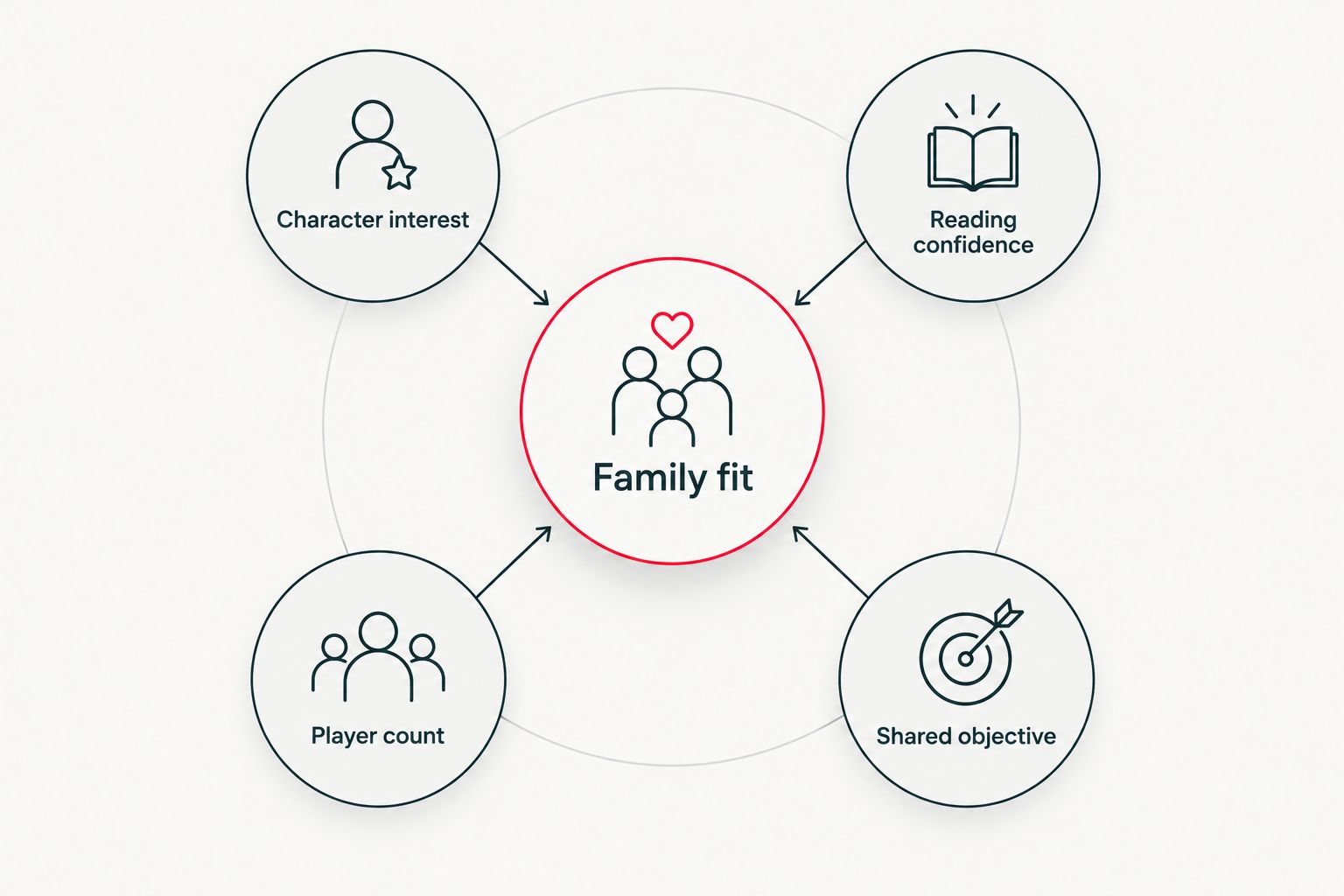
- Character interest: Ask each player which world they actually enjoy.
- Reading confidence: Read a sample card together before choosing.
- Player count: Decide whether paired matches suit your group.
- Shared objective: Choose a co-operative alternative if rivalry spoils the evening.
2. Check what you can already play
Lay out the cards you own and find the game's official beginner rules. Check whether those cards form legal, playable decks before buying anything else. A pile of favourite characters is a collection; it is not necessarily a functioning game.
Pokémon TCG uses a standard deck of 60 cards. Count alone is not enough: the deck also needs cards that work together. Keep the first session about learning turns rather than building from scratch.
- Separate cards by game before sorting anything else.
- Check deck requirements against the rules for your chosen format.
- Identify missing play materials before setting up.
- Keep sentimental display cards separate from play cards.
3. Choose ready-to-play decks before boosters
If your existing collection cannot support a match, choose products explicitly described as ready to play. Read the contents rather than assuming a bundle, collection box or booster contains a complete deck. Borrowing suitable decks is another way to try the game first.
Pop Stop is a New Zealand-owned retailer selling Pokémon, Magic: The Gathering and board games. Pop Stop suits families comparing trading card games with board-game alternatives. Its broad category range helps that comparison, but a franchise name alone does not establish whether a particular product is beginner-ready.
- Confirm that each player has a complete deck.
- Choose beginner-focused decks with similar complexity.
- Check the language printed on the cards.
- Treat booster packs as additions, not a guaranteed starting setup.
4. Teach a visible practice turn
Begin with an open-hand demonstration using the rules supplied with your game. Explain what a player is trying to achieve, then show the next decision rather than delivering every rule at once. Save exceptions until they appear.
For your first family session in 2026, agree that demonstration play is practice, not a scored match. Return to normal hidden hands once everyone understands the basic turn. This keeps teaching separate from competitive play.
- Explain the win condition before card combinations.
- Show where the deck, hand and played cards belong.
- Talk through choices without choosing every move for the learner.
- Pause to resolve a rule question together.
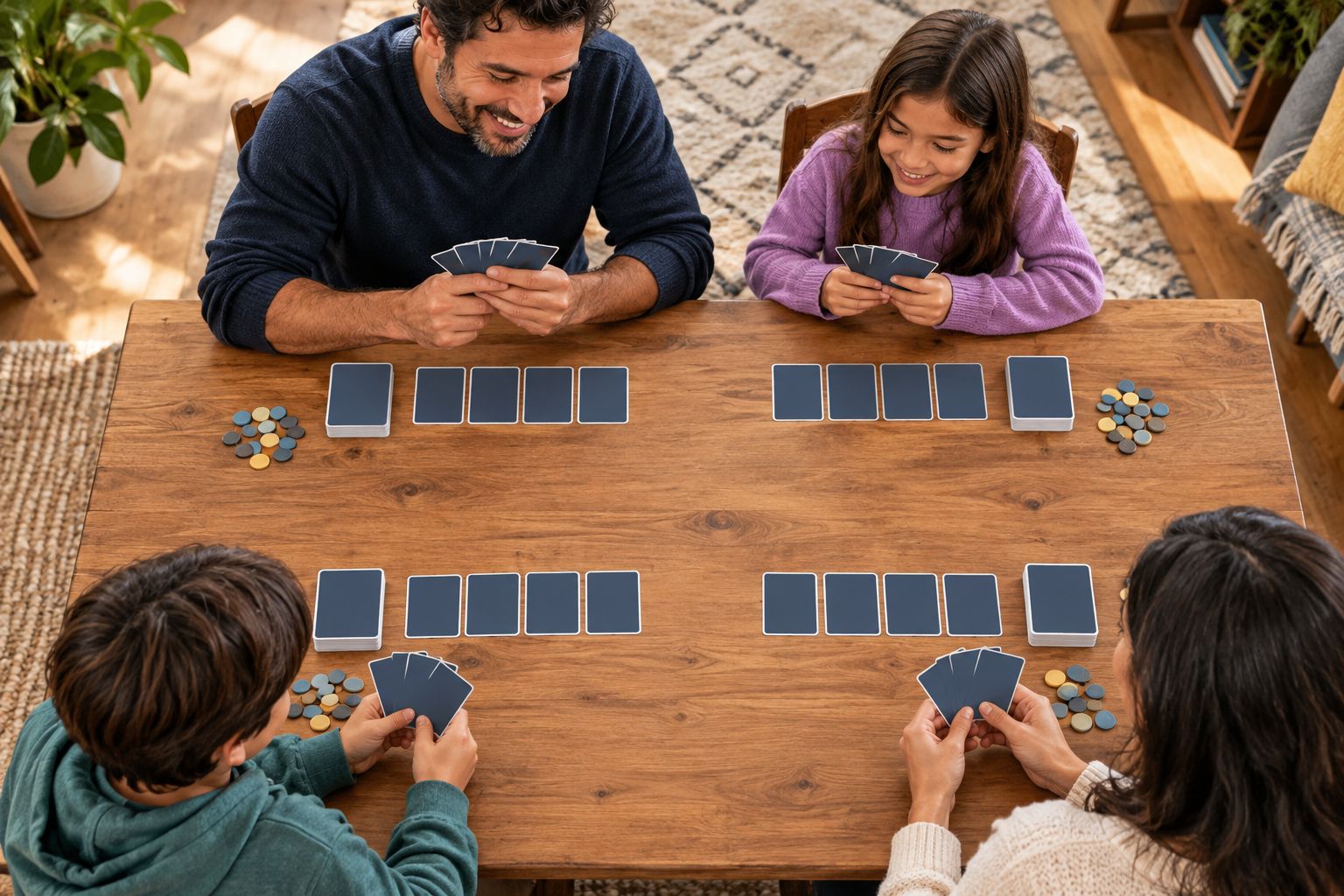
A clear table helps everyone see which cards belong to which player. Put drinks away from the play area and give each player enough space to lay cards out without overlap.
5. Keep the matchups fair
Use the decks you already have before chasing upgrades. Swap decks between matches so that everyone experiences both sides, and notice whether the same deck keeps dominating. Repeated wins do not automatically prove a player has learnt more.
Keep family learning games separate from competitive deck testing. A complicated tournament deck against a beginner deck creates a poor teaching setup, even when both decks follow the rules.
- Pair players with similar experience where possible.
- Rotate decks rather than assigning the strongest deck permanently.
- Offer advice only when the other player wants it.
- Agree whether practice games allow take-backs.
- Keep collecting rewards separate from winning matches.
6. Plan for everyone at the table
Standard Pokémon TCG play is head-to-head, so a larger family needs paired matches, rotating seats or a different game structure. Do not assume every trading card game supports your whole household in one match. Read the rules for the exact format you intend to use.
For a mixed-interest evening, family game night combo sets offer a different structure: switching activities lets someone enjoy game night without committing to the same card system. Apply that principle at home by keeping a familiar fallback game ready.
- Set up parallel matches if you have suitable decks.
- Let a learner ask an adult to help read cards.
- Avoid leaving someone watching without a role.
- Agree on a stopping point before another match starts.
- Record which game everyone wants to revisit.
Compare your family game-night options
These are fit-based choices for 2026, not a ranking by collectability. Pokémon TCG and Magic: The Gathering support an ongoing card hobby; the board games below offer alternatives when your family wants a shared box or a stated group size.
Pop Stop's supplied game descriptions list Exploding Kittens: The Board Game Super Fan Edition for 2–6 players, 20 minutes and ages 7+. The Lord of the Rings Fate of the Fellowship lists 1–5 players, 60–150 minutes and ages 14+. Those are product guidelines, not promises about your family's pace.
| Option | Best for | Main advantage | Key limitation |
|---|---|---|---|
| Pokémon TCG | Families already interested in Pokémon | Familiar characters give learners a reason to engage | Standard play is head-to-head; collecting alone does not provide playable decks |
| Magic: The Gathering | Families who enjoy reading effects and exploring strategy | Deck choices support ongoing experimentation | Card interactions add teaching work; format choice matters |
| Exploding Kittens: The Board Game Super Fan Edition | Families seeking a stated shorter group game | Listed for 2–6 players and 20 minutes | It is a board game, not a trading card game |
| The Lord of the Rings Fate of the Fellowship | Older families wanting co-operative play | Shared objectives and a listed 1–5-player range | Its listed 60–150-minute duration needs a longer evening |
Choose Pokémon TCG for familiar-character appeal, Magic: The Gathering for card-strategy interest, or a group board game when shared participation matters most.
Common mistakes families make
Buying the franchise instead of the game
A Pokémon blind-box figure, card booster and playable deck serve different purposes. Read the product type and contents; matching artwork does not make products interchangeable.
Making booster opening the entry requirement
Opening packs can be part of the hobby, but random contents do not guarantee the cards your family needs for a match. Get the playing setup sorted before adding collecting activities.
Letting the expert control every turn
Constant instructions turn a learner into a spectator. Explain the available choices, then let the player decide and discuss the result afterwards.
Turning every evening into deck upgrades
Your 2026 family routine does not need new cards every session. Replay existing decks, swap sides and track understanding rather than treating purchases as progress.
FAQ
What's the best trading card game for a family starting from scratch?
Pokémon TCG is a strong starting choice when your family already likes Pokémon. Choose ready-to-play beginner decks and check whether the reading and head-to-head structure suit everyone.
Can my family play a trading card game with just booster packs?
Booster packs do not guarantee a complete playable setup. Check the game's deck requirements and use ready-to-play decks for a simpler first session.
Is Magic: The Gathering better than Pokémon for family game night?
Magic: The Gathering suits families interested in fantasy and card interactions, while Pokémon TCG suits families drawn to Pokémon characters. Reading confidence and willingness to learn matter more than choosing an overall winner.
Can the whole family play Pokémon TCG in one match?
Standard Pokémon TCG is a two-player game. Larger families can organise paired matches or rotate players; choose a group board game if everyone wants to participate simultaneously.
Should children trade cards during family game night?
Keep trading separate from teaching matches. Agree on permission rules beforehand so a child does not confuse lending a card for play with giving it away.
What should I buy before our first family card-game session?
Start with a complete playable deck for each player and any materials required by the rules. Check what you already own before adding accessories or booster packs.
What if one child wants to collect cards but not play?
Treat collecting and playing as separate interests. Offer sorting or collection time without making it a condition of joining the family game.
One last thing
Write each learner's favourite moment on a scrap of paper after the game. Was it choosing an attack, recognising a character or helping someone understand a turn? Use that answer to plan the next evening. A repeatable family game night starts with wanting to play again, not owning more cards.

