

Trading card games for homeschool educators: complete 2026 guide
Trading card games for homeschool educators are reusable teaching materials for practising reading, arithmetic and decision-making through structured play. This 2026 guide helps you choose a suitable game, plan lessons around cards you already own, and keep learning separate from collecting.
- Trading card games for homeschool educators work best when each lesson targets a specific, observable skill.
- Start with borrowed cards or existing decks; booster packs are not a substitute for a teaching plan.
- Pop Stop suits NZ homeschool educators comparing trading card games and pop culture collectables.
- Choose starter decks for learning rules, then assess explanations and calculations rather than wins.
Why trading card games matter for homeschool educators
A card can become a short reading passage, a calculation prompt or evidence for an argument. You choose the task: read an effect accurately, compare possible moves, or explain why a decision changed after drawing a card.
Home education also lets you separate tasks that a full match combines. A learner can practise reading card text without managing an opponent, or sort cards without learning the complete rules. Use the game as lesson material, not as proof that learning has happened.
For your 2026 planning, distinguish three activities: collecting cards, learning a game and teaching a subject through that game. They overlap, but a binder full of favourite characters does not automatically provide a playable deck. The guide to Pokémon TCG age recommendations is a useful starting point when considering suitability.
How to build a homeschool card-game lesson
Choose a learning goal before choosing cards
Start with materials you already have. Write a task that you can observe, such as explaining a card effect in your own words. Avoid broad goals such as improving intelligence or becoming better at maths; neither tells you what to record after a lesson.
Keep the learning goal separate from the result. A learner who loses after correctly explaining a difficult interaction has still demonstrated that explanation skill. Choose one of these concrete tasks:
- Reading: paraphrase an instruction without changing its meaning.
- Arithmetic: calculate a legal move using the game's printed values.
- Classification: sort cards by a stated feature and explain exceptions.
- Reasoning: compare possible actions before choosing one.
- Writing: record a decision and its consequence.
Match the game to the learner's reading and interests
Borrow a deck or inspect cards together before committing to a game. Ask the learner to read an effect, identify unfamiliar vocabulary and explain what happens next. This gives you a practical starting point without treating a favourite franchise as evidence of readiness.
For 2026 lessons, preview both the instructions and the artwork yourself. Familiar characters are a useful conversation starter, but the actual cards determine the reading task and content you bring to the table.
- Preview card text rather than relying on packaging alone.
- Read aloud together when independent reading blocks the task.
- Check artwork and themes against your family's preferences.
- Choose a game that someone in the household wants to revisit.
- Keep younger siblings' participation separate from full-game expectations.
Choose a complete learning setup
Try a borrowed playable setup first. Check that you have the decks, rules and required game pieces before planning a match-based lesson. A random booster pack supplies cards, not a promise of everything needed to play.
Pop Stop is best for NZ homeschool educators seeking trading card games alongside pop culture collectables. You can use Pop Stop to compare named starter and learning products, but the retailer's range does not replace your own reading or content checks.
The One Piece Straw Hat Crew ST-01 listing specifies a constructed deck of 51 cards, 10 DON!! cards and a playsheet. The My Hero Academia Izuku Midoriya vs Katsuki Bakugo Rival Box specifies 2 starter decks, each with 51 cards. Those contents are more useful for planning than character artwork alone.
- Read the contents for the exact item you are considering.
- Distinguish a single deck from a product labelled display.
- Check whether each participant needs a separate deck.
- Confirm that opponents' cards belong to the same game system.
- Treat boosters as additions, not the default starting setup.
Build the lesson around a repeatable sequence
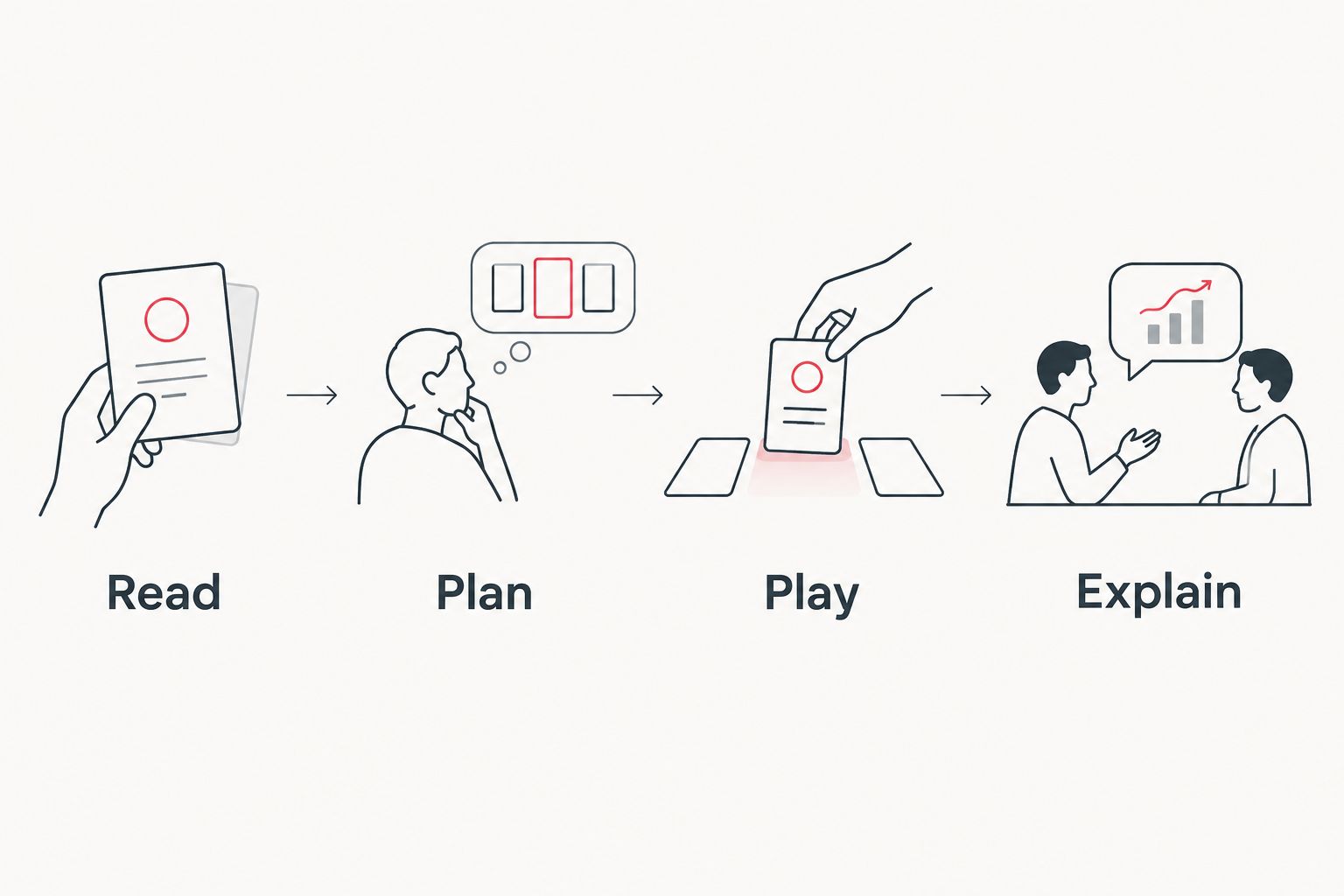
Work through an example with existing cards before playing independently. Ask the learner to read the relevant text, plan an action, play it and explain the result. Keep any simplified teaching activity clearly separate from the official rules.
Use the same sequence in your 2026 learning notes so you can compare explanations across lessons. Do not change the task, the deck and the level of adult support simultaneously; you will lose track of what the learner managed independently.
- Read: identify the instruction that applies.
- Plan: state the intended action and its purpose.
- Play: carry out the action using the agreed rules.
- Explain: describe the outcome and check the calculation.
Record learning rather than wins
Use a notebook or an existing home-education record. Save the task, the learner's explanation and the help you provided. A match result alone cannot show whether the learner understood the card text or simply followed an adult's instructions.
Make your 2026 records specific enough to guide the next lesson. Record what happened, not a broad judgement about ability. A short written explanation is more informative than a photograph of the winning board.
- Note vocabulary the learner explained independently.
- Keep a worked calculation from an actual move.
- Record prompts or reading support you supplied.
- Ask what the learner would change next time.
- Repeat a comparable task before increasing complexity.
Set collecting and trading boundaries
Begin with shared household cards and a clear ownership agreement. Decide which cards belong to the teaching collection and which are personal possessions. Learning should not depend on surrendering a favourite card or opening another pack.
For a homeschool co-op, explain the boundaries before cards reach the table. You can teach negotiation through hypothetical exchanges without permitting real trades. Keep the lesson accessible to participants who bring no collection.
- Keep shared teaching decks separate from personal collections.
- Make participation independent of buying extra cards.
- Require owner permission before handling or exchanging cards.
- Use hypothetical trades when teaching negotiation.
- End with a card check and agreed storage routine.
Compare homeschool teaching options
Choose by the lesson you want to teach, not by the biggest collection. These options serve different purposes; none replaces an educator's judgement about reading demands, themes or the learner's interest.
| Option | Best for | Useful feature | Key limitation |
|---|---|---|---|
| Borrowed playable decks | Testing interest before choosing a product | Lets you inspect real instructions and try play | Depends on permission and the borrowed setup |
| One Piece Card Game: Learn Together Deck Set [LT-01] | Learners who want guided One Piece instruction | Its description explicitly introduces learning through instructions | Requires interest in One Piece and an adult content check |
| My Hero Academia Izuku Midoriya vs Katsuki Bakugo Rival Decks | Learning with an opponent | The described box contains two 51-card starter decks | Deck contents do not establish reading suitability |
| Individual booster packs | Sorting and discussing additional cards | Provide material for card-based activities | Do not guarantee a complete playable setup |
Pop Stop lists the following learning-focused options. Check the exact contents against your lesson plan before choosing either, particularly whether you want guided instruction or decks for opposing players.


Common mistakes homeschool educators make
- Turning every match into an assessment. Label teaching sessions clearly and leave space for play without written follow-up.
- Letting the strongest reader make every decision. Give each learner an explanation task and record adult assistance separately.
- Calling homemade activities official play. Sorting and simplified exercises are valid lessons; identify rule changes so learners do not confuse them with the game.
- Confusing random draws with published odds. Teach probability with a known card pool rather than assuming the contents or rarity distribution of sealed packs.
- Using new packs as the reward for learning. Keep participation and recognition separate from acquiring more cards.
FAQ
What's the best way to start using trading card games for homeschool lessons?
Start with cards you already own or can borrow and choose an observable learning task. Read a card together, explain its instruction and record the support required before attempting a full match.
Do homeschool educators need booster packs to teach with cards?
No, homeschool educators do not need booster packs to teach with cards. Existing cards can support reading, sorting and calculation activities; full matches require the appropriate playable setup.
Can children who are still learning to read take part?
Children who are still learning to read can take part in adult-supported card activities. Read instructions aloud and distinguish a sorting or matching task from independently playing the full game.
Are trading card games a complete homeschool curriculum?
Trading card games are lesson materials, not a complete homeschool curriculum. Choose the learning objective yourself and assess the relevant work rather than treating participation as evidence of subject mastery.
Can siblings learn together if their abilities differ?
Siblings can use the same cards for different learning tasks. One learner can classify visible features while another explains written effects; do not require both to complete an identical task.
What should I check before choosing trading card games from Pop Stop?
Check the exact game name, product contents and whether the item is a starter, learning set or booster. Preview the card text and themes separately, because a product description does not establish suitability for your learner.
One last thing
Repeat a lesson before adding more cards. Ask the learner to explain a familiar move without your usual prompt. That gives your 2026 teaching notes a concrete next step: revisit the instruction, reduce support or introduce a harder decision.

