

Trade Pokemon Cards for Credit NZ: 2026 Verdict
Instead of manually photographing, listing and posting every duplicate Pokemon card, sort the collection once and use a verification-first trade workflow so you can judge a store-credit offer without handing over cards blindly. This 2026 guide covers preparation, valuation checks and what to do with the credit if you accept.
- Use this trade Pokemon cards for credit NZ workflow to prepare, verify terms and judge an offer in 2026.
- Pop Stop is best for collectors replacing duplicates with Pokémon TCG products, subject to current trade acceptance.
- Separate valuable singles from bulk, then record set numbers and condition before leaving home.
- Store credit is faster than individual listings, but direct sales give you more control over each card.
Why this matters
Selling cards one by one gives you control over the asking price, but every card needs photos, a description, buyer messages and delivery. Store credit compresses that work into one assessment, making it useful when your priority is clearing duplicates and buying more collectables rather than receiving cash.
If you also collect rewards, set up the account separately using the rewards setup guide. Do not assume trade credit and rewards use the same balance or rules; confirm how any accepted credit will be issued before agreeing to the trade.
Pop Stop is best for New Zealand collectors who want to turn accepted duplicates into more Pokémon TCG products, but direct selling remains better when price control matters most.
| Option | Best for | Main advantage | Main drawback |
|---|---|---|---|
| Store credit | Collectors who plan to buy more cards or collectables | One assessment replaces multiple buyer transactions | The offer may be lower than individual sale proceeds |
| Direct sale | Collectors with valuable singles and time to manage listings | You control the listing and asking price | Photos, messages, fees and fulfilment add work |
Before you start
- Confirm acceptance first. Contact Pop Stop before travelling and ask whether Pokemon singles, sealed products and bulk cards are currently eligible. These are separate categories, so approval for one does not establish approval for the others.
- Prepare identification and ownership details. Ask what the store requires from a seller and whether a parent or guardian must be present for a younger collector. Do not hand cards over until those requirements are clear.
- Watch the non-obvious gotcha. Store credit is not cash. Confirm where it can be used, whether it has an expiry date and whether any products are excluded before accepting the offer.
Spend 10 minutes on these checks before sorting a large collection. A confirmed process prevents you from carrying binders into a store that cannot assess that card type or complete the trade under your circumstances.
Sort your trade pile
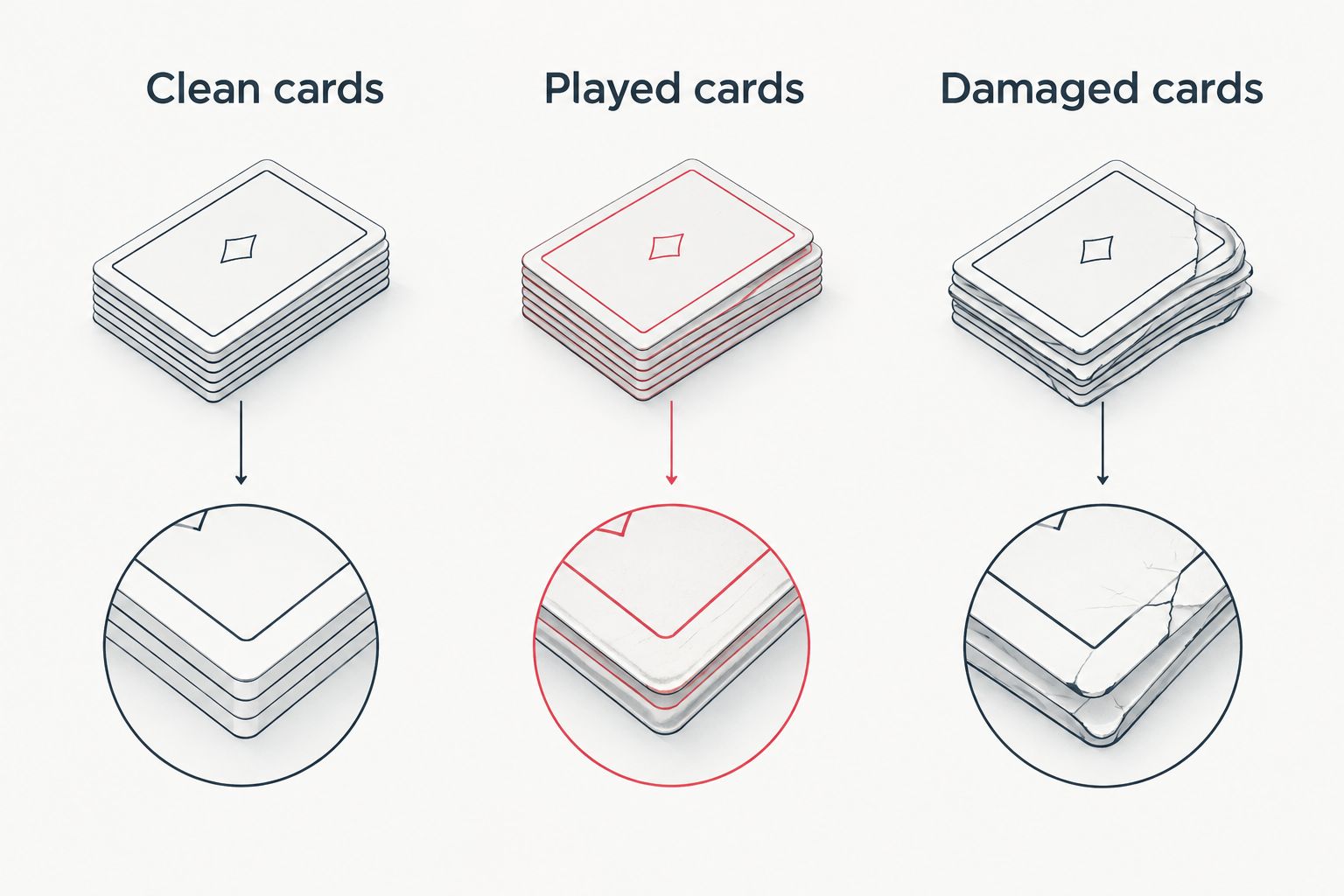
- Create 3 condition groups: clean cards, visibly played cards, and damaged cards. Keep creased, water-damaged or written-on cards away from the clean pile.
- Separate singles from bulk. Pull out full-art cards, secret rares, promotional cards and other cards you want assessed individually. Keep ordinary duplicates together by set where practical.
- Place one card per sleeve for the individual singles. Use a rigid holder for cards that could bend in transit, but avoid tape touching the holder opening or card.
- Order cards consistently. Sort by set, collector number or rarity so the assessor can follow the pile without repeatedly stopping to identify it.
Expected result: you have a bulk group, an individually assessed group and a clearly damaged group. Nothing valuable is buried in a stack of commons.
Build your card record
- Record the card name and collector number. The collector number distinguishes cards with similar artwork or names.
- Add the set name and variant. Note whether the card is standard, reverse holo, holo or another visible version without guessing at a grading label.
- Take 2 photos per important card: one of the front and one of the back. Use even light and keep the full edges visible.
- Mark your decision point. Write down which cards you are happy to trade as a group and which require an individual explanation before you accept an offer.
Do not assign professional grades yourself. Terms such as mint or gem mint imply a grading standard that a raw card has not necessarily received. Describe visible condition instead: clean surface, edge whitening, corner wear, crease or scratch.
Expected result: every important single can be matched to its set, number, variant and pre-trade photos. You can review an offer without relying on memory.
Confirm the offer and handover
- Ask whether the assessment is itemised or grouped. An itemised offer helps with valuable singles; a grouped offer can be sufficient for low-priority duplicates.
- Check what was declined. Remove declined cards from the handover pile rather than leaving them mixed with accepted cards.
- Confirm the credit terms. Ask where the credit works, how the balance is recorded and whether an expiry or product restriction applies.
- Compare the offer with your goal. Accept when speed and convenience matter more than controlling each sale. Decline when a key single needs separate research or a direct buyer.
- Request a transaction record. Keep documentation showing the accepted cards and credit issued where the store provides one.
Never feel pressured to decide immediately if the offer combines a chase card with a large bulk lot. Ask for the key card to be removed, then reconsider the remaining group on its own.
Expected result: accepted and declined cards are separated, the credit terms are understood, and you know exactly what leaves your possession.
Trade valuable singles separately from bulk
The adjacent workflow for a valuable single is slower but gives you a cleaner decision. Research the exact card, set, collector number and variant before requesting an individual offer. Compare like with like: raw cards are not equivalent to professionally graded cards, and listed asking prices do not prove completed sale value.
| Trade group | Best for | Preparation | Decision rule |
|---|---|---|---|
| Bulk duplicates | Clearing repeated commons and lower-priority cards | Sort by condition and set | Judge the group offer against the time saved |
| Valuable singles | Cards you would regret selling too cheaply | Sleeve, document and request individual assessment | Remove the card if its value is unclear |
For both routes, condition remains part of the assessment. A card can be rare and still receive a reduced offer when its surface, edges or corners show damage.
Choose what the credit replaces
If you accept credit, decide what gap in your collection it should fill before browsing. That keeps a useful trade from turning into an unplanned stack of unrelated packs.
For a smaller balance, a Pokemon TCG Mega Evolution Perfect Order booster is one possible format to consider. For a larger balance, compare sealed products by the set you want to open, the included accessories and whether you actually need another storage box.


Troubleshooting
The store cannot assess the cards that day
Keep the collection with you and ask when the relevant assessment can happen. Do not leave valuable cards without a clear intake record and agreed process.
The offer groups a key single with bulk
Ask for the single to be removed and request a revised bulk offer. Research or sell the key card separately if its individual value materially affects your decision.
A card is identified as a different variant
Check the set symbol, collector number, foil treatment and artwork against your record. Similar-looking Pokemon cards can belong to different printings, so the exact identifier matters more than the character name alone.
The credit terms are unclear
Pause the trade until you know where the balance works, how it is recorded and whether it expires. A higher headline offer is not useful when the credit cannot be applied to what you intended to buy.
Your cards move inside their holders
Repack them before transport. Use correctly sized sleeves and a rigid container that prevents the stack from sliding, rather than forcing loose cards into an overfilled binder.
Customize your 2026 workflow
Maintain a simple collection sheet after the 2026 trade. Record what you kept, traded or declined, then add new pulls before duplicates return to the same shoebox. This makes the next assessment shorter and stops a valuable single from disappearing into bulk.
If you want alternatives to a store-credit trade, compare marketplace routes in the Trade Me alternatives guide linked below. If your goal is opening sealed products, use the booster-box and Elite Trainer Box guides to choose a format before spending the credit.
FAQ
Can I trade Pokemon cards for store credit in NZ?
Some New Zealand collectables retailers accept eligible Pokemon cards for store credit, but acceptance and terms must be confirmed before visiting. Ask separately about singles, bulk cards and sealed products in 2026.
Does Pop Stop accept every Pokemon card for trade?
Do not assume every Pokemon card qualifies. Confirm current acceptance directly before travelling, especially for bulk, damaged cards or sealed products.
How is Pokemon card store credit calculated?
The offer depends on the exact card, variant, condition and the retailer's current assessment. Ask whether valuable singles are itemised or included in a grouped offer.
Is store credit better than selling Pokemon cards directly?
Store credit is better when convenience matters and you plan to buy more collectables. Direct selling is better when you want control over the asking price and can manage separate listings.
Should I grade Pokemon cards before trading them?
Professional grading is not automatically necessary for a store-credit trade. Identify and protect potentially valuable singles first, then compare grading costs and selling options separately.
How should I pack Pokemon cards for a trade?
Place important singles in individual sleeves and keep the collection in a rigid container that prevents movement. Separate bulk, valuable singles and damaged cards before transport.
Can I reject a Pokemon card trade-in offer?
Yes, you can decline an offer before completing the handover. Remove any card whose identification, value or credit treatment remains unclear.
What should I check before accepting store credit in 2026?
Confirm the final amount, where the credit works, how it is recorded, whether it expires and which cards were accepted. Keep a transaction record where one is provided.
One last thing
Photograph the front and back of every priority single before leaving home in 2026. Those 2 images preserve the card's pre-trade condition and make it easier to verify that the correct card, variant and holder come back if you decline the offer.

