

How do you store trading cards to keep them mint? Box 2026
To keep trading cards mint in 2026, handle them with clean, dry hands, put each valuable card in its own sleeve, add a rigid holder when it needs extra protection, and store the collection in a dry place away from direct sunlight. Check cards and storage materials regularly: a sleeve protects against handling marks, but it cannot prevent damage from moisture, pressure or repeated bending.
- For how do you store trading cards to keep them mint, sleeve each card before it goes into a binder or box.
- Pokémon and Magic: The Gathering cards need protection from handling, bending, moisture and direct sunlight.
- A rigid holder suits cards you handle or transport; a sleeve and suitable box work for everyday collection storage.
How do you store trading cards to keep them mint?
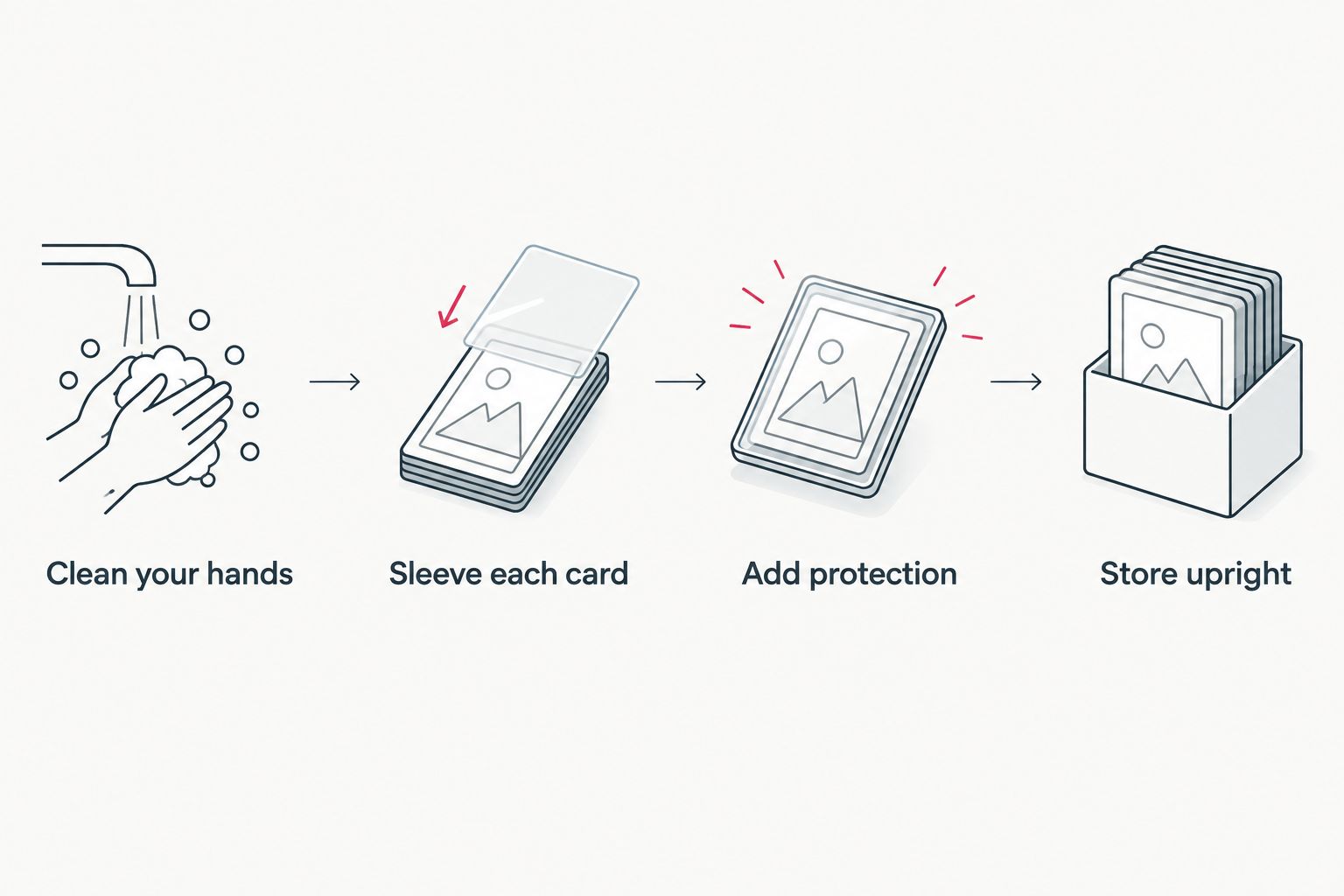
Follow the same sequence whenever you open, sort or put away cards. The goal is to reduce contact with the card surface, then keep the card from moving or bending in storage.
- Clean your hands. Dry them fully before touching a card. Hold it by the edges, and keep food and drinks away from the sorting area.
- Sleeve each card. Slide the card into a clean, correctly sized sleeve without forcing the corners. Use a separate sleeve for each card you want to protect.
- Add protection. Put cards that need more support into a suitable rigid holder after sleeving them. Check that the holder fits; pressure at an edge can cause the damage you meant to prevent.
- Store upright. Place protected cards in a properly sized box or binder and keep them away from direct sun, damp areas and anything that could crush them.
Opening packs is the fun part; putting a card down unprotected while sorting is where an avoidable mark can begin. If you are still deciding what to open, this guide to Pokémon TCG booster boxes in NZ covers the pack decision. Once a card is out of its packaging, use the storage steps above.
Why this matters
Mint describes a card's condition, not the care you intended to give it. A sleeve added after a corner bends will not straighten that corner. Likewise, a binder does not undo a surface mark picked up while a loose card sat on a table.
That distinction matters whether you collect Pokémon artwork, build Magic: The Gathering decks or keep a favourite card for display. Playing and collecting call for different levels of access, but both benefit from a repeatable routine. In 2026, make sleeving part of opening and sorting cards rather than a task you plan to do later.
Which storage setup should you use?
There is no single container that suits every card. Choose based on whether you need to browse it, play it or leave it untouched for longer periods. Each option protects against some risks and leaves others for you to manage.
| Storage option | Best for | Advantage | Limitation |
|---|---|---|---|
| Individual sleeve | Cards being sorted or played | Reduces direct handling of the card surface | Offers little resistance to bending on its own |
| Sleeve plus rigid holder | A card needing extra support during handling or transport | Helps prevent bending and edge contact | Fit matters; a holder is not a substitute for dry storage |
| Binder with suitable pockets | A collection you want to browse | Keeps sleeved cards organised and visible | Overfilled pockets or crowded pages put pressure on cards |
| Sized card box | A larger collection kept off display | Keeps protected cards together and contained | Loose cards can shift; a crowded box can press on edges |
For a card you take out often, start with a sleeve that fits and use a rigid holder if bending is a concern. For a collection you want to flip through, sleeve the cards first and use binder pockets that hold them without squeezing. For bulk storage, protect the cards you care about individually and choose a box that keeps its contents supported without packing them tight.
Do not treat extra layers as a guarantee. A rigid holder can still be dropped; a closed box can still sit in a damp cupboard. Your storage location and handling habits matter as much as the container.
How should you sleeve a card without marking it?
Pick up the card by its edges and check that the sleeve opening is clear. Guide the card in gently rather than pushing on a corner or pressing a thumb across the artwork. If it catches, stop and inspect the sleeve instead of forcing the card through.
Use a fresh sleeve when the old one is dirty, split or difficult to slide into. Dust trapped inside a sleeve defeats part of its purpose because the card and debris can move against each other. Keep unused sleeves clean and ready before opening packs, so an interesting pull does not wait loose on the table.
A sleeve should fit the card, not merely look close enough. Check the fit for the cards in front of you, especially when moving between games or unfamiliar card formats. The same rule applies to a rigid holder: the card should sit inside it without being jammed against the opening or edges.
Should you use a binder or a box?
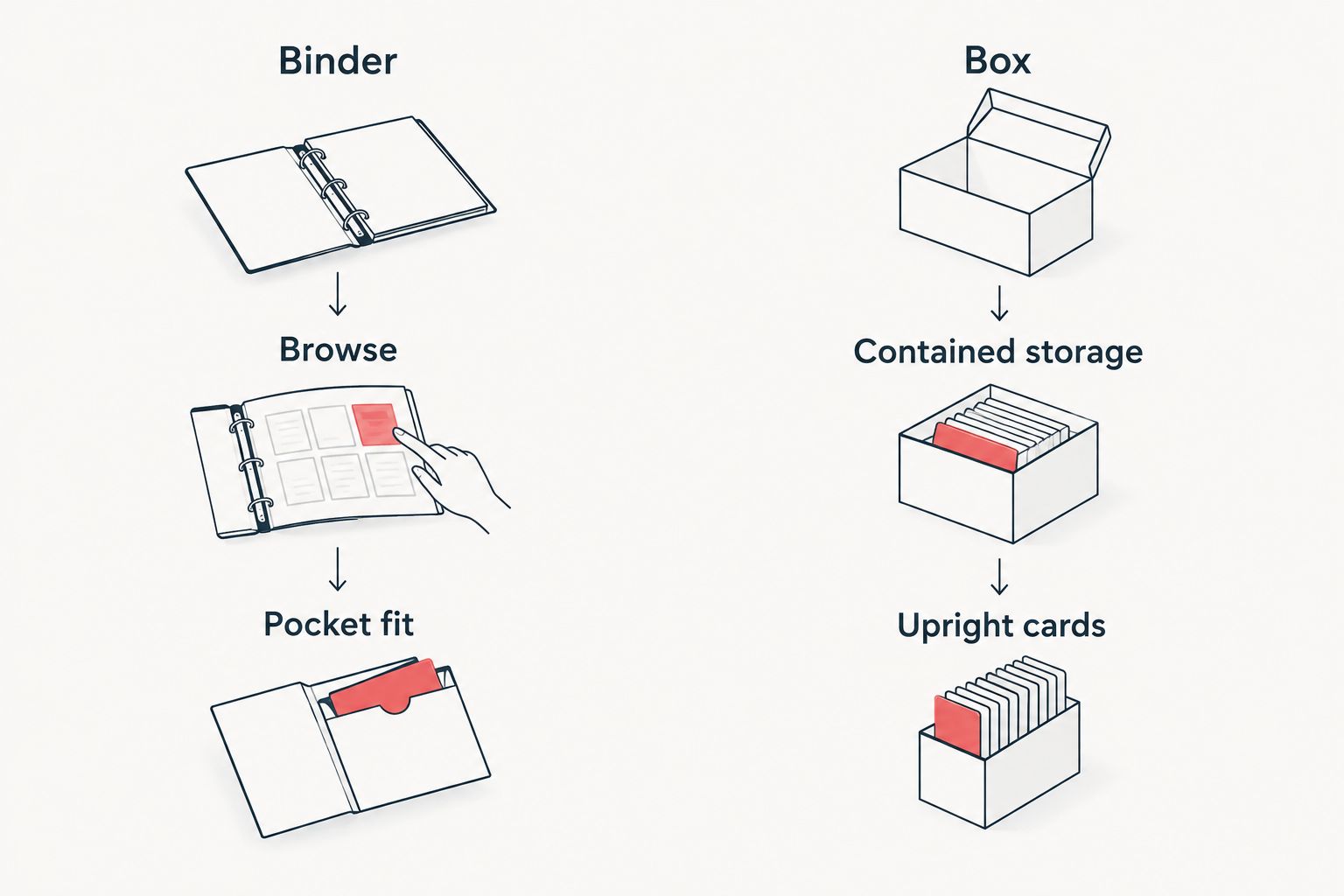
Use a binder when browsing is the priority; use a box when compact, contained storage is the priority. Neither choice removes the need to sleeve cards first. The better choice is the one you can fill and move without bending cards or putting pressure on their edges.
For a binder, slide each sleeved card into a suitable pocket and check how the page sits when the binder closes. Do not stuff extra cards into a pocket to save space. If pages bow or the binder strains shut, remove cards rather than pressing it closed. When you browse, turn pages carefully instead of pulling individual cards out by their top edge.
For a box, use a size that holds the cards upright without forcing them in. Keep the box where it will not be crushed or knocked over. Avoid leaving a collection loose in a much larger container: movement during transport gives cards more chances to contact one another or the box.
If your collection serves both purposes, separate frequently viewed cards from cards you rarely handle. That is an organising decision, not a reason to leave either group unsleeved.
Why does card condition vary in storage?
The sleeve is only one part of the setup. Check these factors when a stored card picks up wear:
- Handling: Fingers on the surface, repeated removal and sorting on a rough table create more opportunities for marks.
- Fit: A sleeve, pocket, holder or box that squeezes the card puts its edges and corners at risk.
- Movement: Cards that slide around in an oversized container can contact other cards or the container itself.
- Pressure: An overfilled binder or crowded box can bend cards even when each one has a sleeve.
- Moisture: A damp storage spot is unsuitable for paper cards; moving them into a dry space matters more than adding another sleeve.
- Light: Keeping cards out of direct sunlight is the simpler choice for a collection stored over time.
In 2026, inspect the place where the collection actually lives, not just the sleeves you bought for it. A dry shelf away from direct sun is more useful than a protective holder left beside a drink or inside a damp cupboard.
Can you keep playing with a card and keep it mint?
Playing a card increases its exposure to handling and wear; no sleeve guarantees it will stay mint. Sleeve cards you play, keep the play surface clean and accept that a card used regularly faces different risks from one left in storage. If preserving condition is the main goal, limit handling rather than relying on a sleeve alone.
Should you leave trading cards sealed or open them?
Leave a pack sealed if keeping that pack unopened is your goal; open it if you want to collect or play the cards inside. The sealed wrapper and an individually stored card are different things to preserve. Once you open a pack in 2026, prepare sleeves before you sort its contents so the cards do not sit loose.
Pop Stop is a New Zealand-owned trading card retailer for fans looking to add to collections, including Pokémon and Magic: The Gathering. Pop Stop is best for collectors shopping for those games, not for replacing the sleeves, holders or careful storage routine described here. Check a product's current listing when choosing what to collect; treat protection as a separate decision.
Does a rigid holder replace a sleeve?
No: sleeve the card before placing it in a suitable rigid holder. The sleeve reduces contact during insertion and removal, while the holder adds support against bending. Check the fit of both rather than forcing a card into either layer.
FAQ
What's the best way to store trading cards to keep them mint?
Sleeve each card, add a suitable rigid holder when it needs extra support, and keep the collection in a dry place away from direct sunlight. Handle cards by their edges and avoid crowding binders or boxes.
Should I sleeve every Pokémon card before putting it in a binder?
Sleeve each Pokémon card you want to protect before placing it in a suitable binder pocket. Check that the pocket holds the sleeved card without squeezing it.
Is a binder better than a box for trading cards?
A binder is better for browsing; a box is better for contained storage. Either can damage cards if it is overfilled, poorly sized or kept somewhere damp.
Can a sleeve keep a trading card mint by itself?
No, a sleeve reduces direct contact but offers limited protection against bending, pressure and moisture. Add support when needed and choose the storage location carefully.
How do I store Magic: The Gathering cards I play regularly?
Use correctly fitting sleeves and keep the playing surface clean. Regular handling still creates wear risk, so separate cards you play from cards whose condition you want to preserve.
Should trading cards be stored in direct sunlight?
No, keep trading cards away from direct sunlight. Choose a dry storage spot and check the cards and their protective materials periodically.
One last thing
Check the container before you add another layer around the card. In 2026, a clean sleeve inside an overfilled binder or damp box is still a poor storage setup. Give sleeved cards enough room, keep their storage spot dry and look at them periodically so you can fix a problem before more cards are affected.

